
Cinnamon rolls are at their best when the dough is rich, tender, and soft. These high altitude soft cinnamon rolls use a milk bread dough enriched with eggs, butter, and whole milk for a luxurious brioche-like crumb that stays fresh for days.
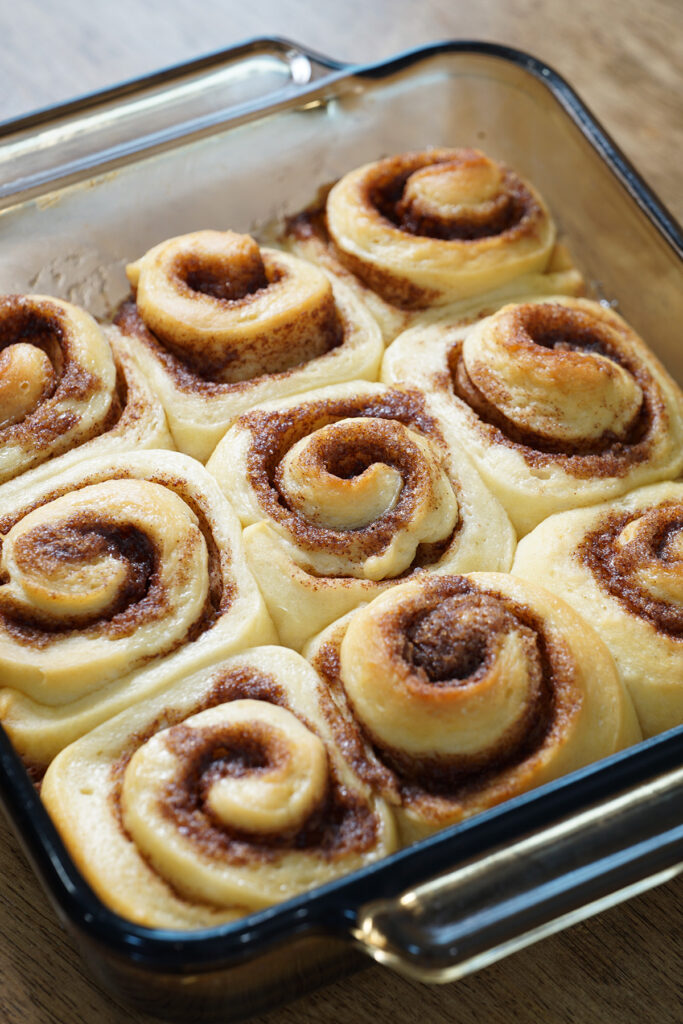
What truly sets these apart is the tangzhong method. By cooking a small portion of the flour and milk into a thick paste before mixing, the dough absorbs more moisture, creating rolls that are exceptionally soft and stay fresh longer.
And if you bake at high altitude, you know dough can be unpredictable. Lower air pressure causes it to rise faster, dry out more easily, and overproof before you realize it. This recipe has been carefully tested at 8,000 feet to ensure a reliable rise, fluffy structure, and pillowy texture.
This is the first recipe that I posted on Alpine Spoon. When I started this website, I knew that this had to be my first recipe to share because it’s just that good!
Why This Recipe Works
- The yeast amount is slightly low to prevent overproofing.
- Tangzhong adds tenderness and a longer shelf life.
- The dough is enriched with butter and milk for softness and flavor.
- Rise times are guided by visual cues.
If You’re Between 5,000–7,000 Feet: Use the yeast amount listed.
If You’re Around 8,000 Feet (Where I Tested this Recipe): Follow recipe as written, but always use visual cues rather than time alone.
If You’re Above 9,500–10,000 Feet:
- Reduce yeast by about 10%.
- Increase oven temperature by 5–10°F.
- Consider adding 1–2 tablespoons extra flour if dough feels overly slack.
Ingredients Used in High Altitude Soft Brioche Cinnamon Rolls
Bread Flour
Provides structure while keeping the rolls tender with a pleasant, subtle chew. All-purpose flour can be used, but it may lack in structure.
Whole Milk
Adds richness and moisture. The fat helps counteract the drying effects of altitude.
Unsalted Butter
Enriches the dough and keeps the crumb soft for days.
Granulated Sugar
Feeds the yeast and lightly sweetens the dough without overpowering the filling.
Active Dry or Instant Yeast
Reduced slightly for altitude to prevent overproofing and collapse.
Cinnamon
The heart of the filling. Use fresh, high-quality cinnamon for the best flavor.
Brown Sugar
Adds depth and moisture to the filling, preventing it from drying out while baking.
Step-by-Step Tips
- The dough should feel soft but not sticky. If it clings heavily to your fingers, add flour 1 tablespoon at a time.
- Don’t overfill with cinnamon sugar or the rolls may separate while baking.
- Bake just until lightly golden and the center of a roll springs back when pressed. Overbaking dries rolls quickly at elevation.
- Frost while slightly warm so the glaze melts into the layers.
FAQ
Do I have to let my rolls rise overnight?
Nope, you can make them from start to finish in the same day by letting them rise 45-65 minutes after rolling and cutting, then bake.
Why did my cinnamon rolls collapse in the center?
This often happens when dough rises too long and overproofs. At high altitude, yeast works faster and structure is weaker, so slightly underproofing is safer than overproofing.
Can I freeze cinnamon rolls?
Yes. Freeze unbaked rolls after shaping, or freeze baked rolls without glaze. Thaw and warm gently before frosting.
Why are my cinnamon rolls dry?
Dryness is usually caused by too much flour or overbaking. Altitude increases evaporation, so measuring flour by weight helps prevent this.
High Altitude Ultra-Soft Cinnamon Rolls
Ingredients
Tangzhong (Flour-Milk Paste)
- 2 Tablespoons bread flour (20 g)
- 1/2 cup whole milk (120 ml)
Dough
- cooled tangzhong (from above)
- 3/4 cup whole milk, warmed to 105–110°F (175 ml)
- 1 3/4 teaspoons active dry yeast or instant yeast (5.6 g)
- 2 large eggs room temperature
- 1 teaspoon vanilla extract
- 3 Tablespoons granulated sugar (43 g)
- 1 1/4 teaspoons salt (8 g)
- 3 1/2 cups bread flour (445 g) plus 1–3 tablespoons as needed
- 10 Tablespoons unsalted butter (150 g) softened, divided
Cinnamon Sugar Filling
- 8 Tablespoons unsalted butter (1 stick; 115 g) unsalted butter, softened
- 1 1/2 cups packed brown sugar (330 g)
- 2 Tablespoons ground cinnamon (6 g)
- 1/8 teaspoon salt (1 g)
Cream Pour
- 1/4 cup heavy cream
Vanilla Icing
- 8 Tablespoons unsalted butter (1 stick; 115 g) softened
- 3 cups powdered sugar (360 g)
- 1 teaspoon vanilla extract (5 ml)
- 2 Tablespoons milk (30 ml)
- Pinch of salt
Instructions
Make the Tangzhong (Flour-Milk Paste)
- In a small saucepan, whisk together the flour and milk until smooth.
- Cook over medium heat, whisking constantly, until thickened to a pudding-like paste, about 3–4 minutes.
- Remove from heat and cool to room temperature before using.
Mix the Dough
- In the bowl of a stand mixer fitted with a dough hook (or paddle attachment), combine the cooled tangzhong, warm milk, yeast, eggs, vanilla extract, sugar, salt, bread flour, and half of the butter. Mix on low speed until a shaggy dough forms.
- On medium-low speed, knead for 8–10 minutes, until the dough is smooth and elastic. If the dough clings excessively to the sides of the bowl or sticks to your finger, add flour 1 tablespoon at a time, up to 3 tablespoons total.
- Gradually add the remaining butter, one tablespoon at a time, allowing each addition to fully incorporate before adding the next. Continue kneading for 8–15 minutes, until the dough forms a soft, elastic ball. A slight tackiness is normal.
- The dough should be soft and slightly tacky, but not sticky or batter-like.
First Rise
- Transfer the dough to a large, lightly greased bowl. Cover with a damp towel or plastic wrap and let rise in a warm place for 1–2 hours, or until doubled in size.
Roll the Dough
- Generously dust flour over a clean work surface and place the dough. Using a lightly floured rolling pin, roll the dough into a 16×20-inch rectangle, about 1/4-inch thick. It's important to roll the dough thin and even. If the dough is too thick, the rolls will require a longer bake time.
- If the dough begins shrinking back as you roll it, cover it lightly and let it rest for 10 minutes. This allows the gluten to relax, making it easier to roll out.
Make the Cinnamon Filling
- In a medium bowl, combine the butter, brown sugar, cinnamon, and salt. Stir until blended. Spread the filling evenly over the dough, leaving a ½-inch border along the long edge that's furthest away from you.
Shape the Dough
- Starting with the long edge closest to you, roll the dough into a log. Roll firmly but gently to prevent squeezing out the filling.
- Using a sharp knife, cut into 12 equal pieces, about 1 1/4 inches wide each.
Refrigerate Overnight
- Arrange the rolls in a greased 9×13-inch pan, leaving slight space between each. Cover tightly with plastic wrap or foil and refrigerate overnight, 8–16 hours.
Second Rise
- The following day, remove rolls from the refrigerator and allow to rise until puffy and doubled in volume, about 1 ½ – 2 hours.
- Preheat the oven to 350°F.
Cream Pour & Bake
- Just before baking, pour the heavy cream evenly over the tops and in between the rolls. This helps to create ultra-soft centers.
- Bake for 25–30 minutes, until golden brown and the center of one roll reaches 190°F on an instant-read thermometer. The middle should feel set and spring back lightly when gently pressed. If the tops brown too quickly before the center is done, loosely place foil on top of the pan for the final minutes of baking.
Make the Icing
- In a large bowl using a handheld or stand mixer fitted with a paddle attachment, beat butter until smooth. Gradually add the powdered sugar, then mix in the vanilla, salt, and milk until the icing reaches a soft, spreadable consistency. Spread over warm rolls before serving.
- Cover leftover rolls tightly. Store at room temperature for up to 2 days, or refrigerate for up to 5 days.